What Do You Feed a Lynx


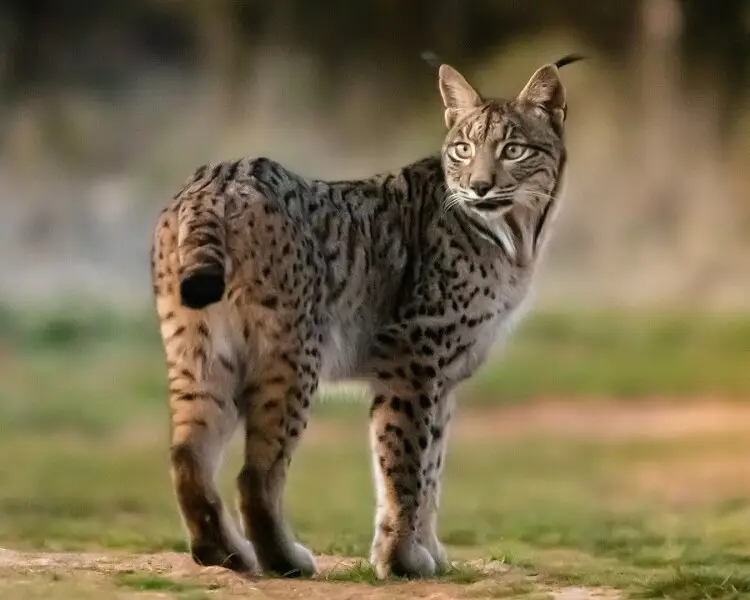
Iberian Lynx
Spanish lynx, Pardel Lynx
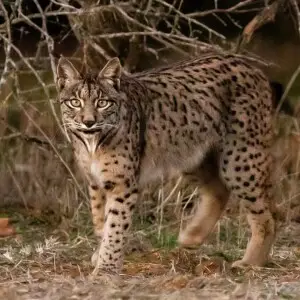
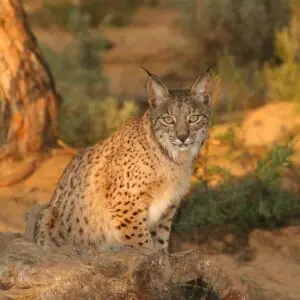
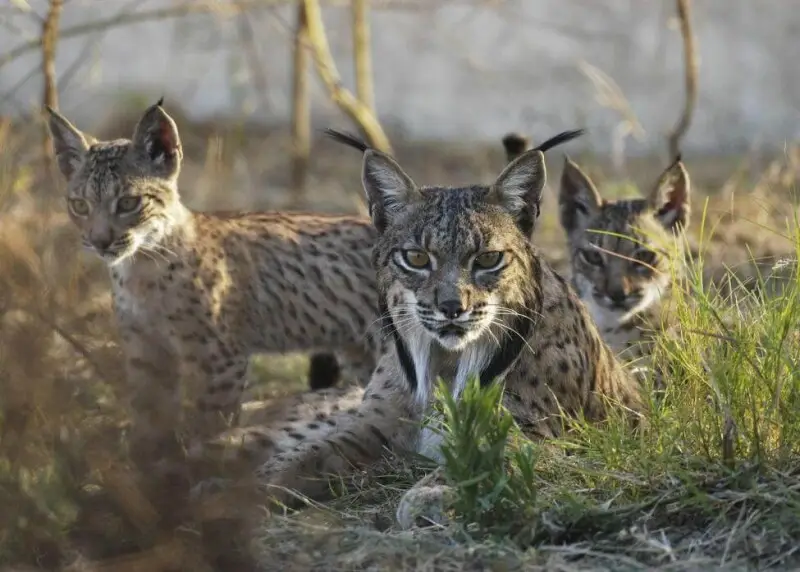
The rarest of the lynx species, the Iberian lynx, is the most threatened cat species, currently on the verge of extinction. It is of medium size and is smaller than the similar Eurasian lynx, which also has a characteristically bobbed tail, a spotted coat, long legs, and a muscular body. Its relatively short, coarse coat is tawny to bright yellowish-red, with black or brown spots and white underparts. Males are larger than females, both having prominent whiskers, a characteristic "beard" encircling their face, and distinctive black ear tufts.
Photos with Iberian Lynx
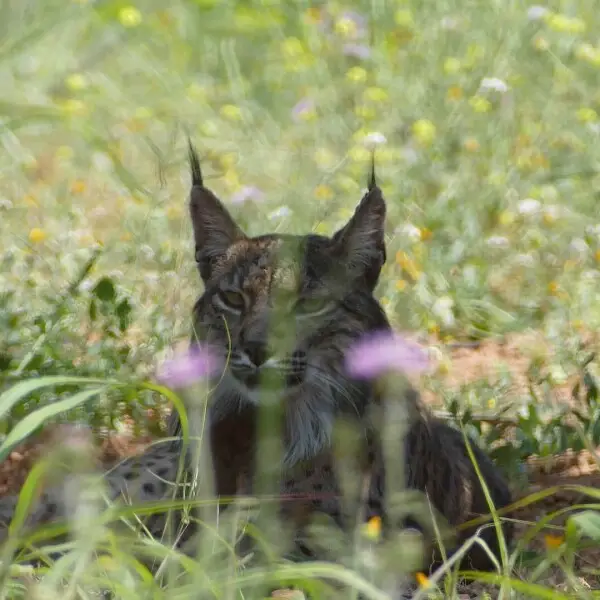
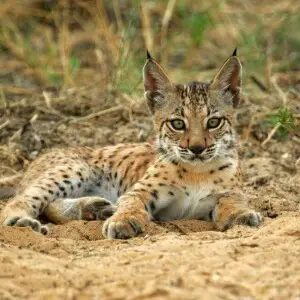
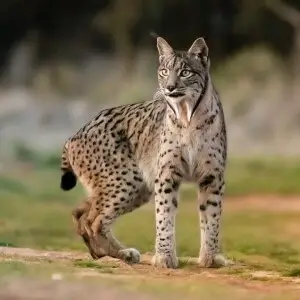
View 22 more photos of Iberian Lynx
Distribution
Geography
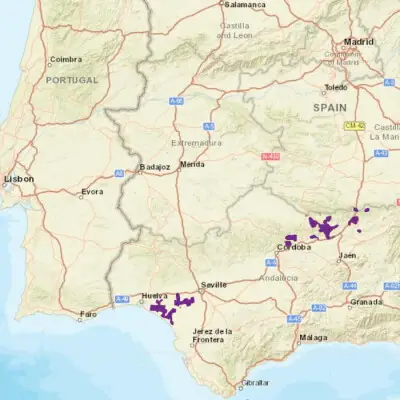
Iberian lynxes used to be widespread throughout the south of France and the Iberian Peninsula. Today they reside in Andujár-Cardeña and Doñana National Park in the Spanish autonomic region of Andalusia. Their preferred habitats are Mediterranean woodlands and Maquis shrublands, where there is a mix of open pasture and dense scrub. Iberian lynxes also prefer prefers open grassland mixed with dense shrubs such as strawberry tree, mastic, and juniper, and trees such as holm oak and cork oak. The animals are now largely restricted to mountainous areas.
Biome
Climate zones
Habits and Lifestyle
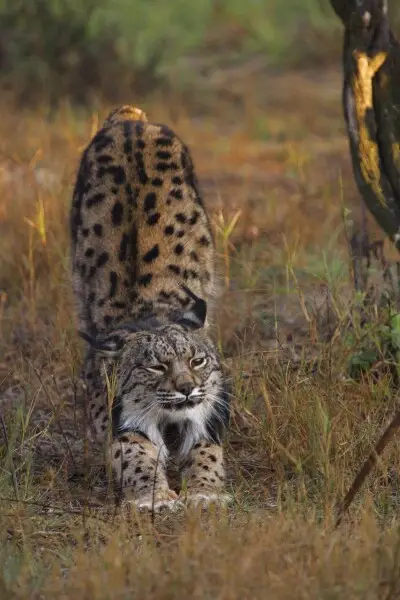
Iberian lynxes are solitary and nocturnal, with most activity around sunset, the time when prey is the most active. Daily patterns of activity are linked to the European rabbit, their primary prey. During winter, these lynxes may become diurnal for a period of time. Adult males and females live in territories that overlap and both genders will defend their territories against conspecifics of the same gender.
Diet and Nutrition
Iberian Lynxes are carnivores and eat mainly small mammals, particularly rabbits and birds. Deer and mouflon are prey when rabbits are scarce.
Mating Habits
Iberian lynx are polygynous, with one male mating with multiple females, but in northern Donana National Park, where the amount of suitable territories is small and intersexual competition is increasing, males must have smaller territories, which are easier to defend against rival males, and so they focus on defending their exclusive access to one particular female, which results in monogamy. The mating season takes place from January to July. Gestation lasts about 60 days and the female bears 2-3 kittens that are born blind and helpless, weighing between 200 and 250 g (7.1 and 8.8 oz). The young become independent at about 7-10 months but will stay in the territory where they were born until the age of 20 months. A female waits until her territory is established before she breeds. This may take as long as 3 years or may, in fact, never happen. Males reach maturity when they are 1 year old.
Population
Population threats
The Iberian lynx's largest threat is habitat destruction, and also the destruction of its prey. It is also often killed by traps set for rabbits, and by cars, as roading increases.
Population number
According to the IUCN Red List, the total population size of the Iberian lynx is 156 mature individuals. This species is classified as Endangered (EN), but its numbers are increasing today.
Ecological niche
Aside from depending on European rabbits as their food source, Iberian lynx have very particular habitat requirements. Due to this, they could act as reliable bioindicators of the health of their particular ecosystem. Furthermore, moderate population numbers of these animals may positively affect overall prey fitness, predation possibly acting as a mechanism of disease control. Also, Iberian lynxes often kill smaller carnivores in order to reduce the competition for prey.
Fun Facts for Kids
- Iberian lynxes, like all cats, have vertical pupils and superb vision, particularly during low visibility. Their reflexes are excellent, their whiskers give highly detailed information related to their sense of touch, and they have excellent hearing, due to their large ears.
- Iberian lynxes will bury uneaten prey to return later to finish eating it.
- Iberian lynx are able to survive in cold climates as their bodies are designed for that purpose, and they can therefore live on plains and in cold mountains. Their feet with their long hair help them move silently over the snow and also to regulate their body temperature.
- A male Iberian lynx needs to eat one rabbit a day, but the female, when raising her kittens, needs three.
- Lynxes puff when irritated or frightened.
- Their name comes from the Greek "to shine," and may refer to the reflective nature of the cat's eyes.
- The first lynx to be born in captivity was Saliega, a female born in southern Spain in Sierra Morena on March 29, 2005.
References
More Fascinating Animals to Learn About
Source: https://animalia.bio/iberian-lynx
0 Response to "What Do You Feed a Lynx"
Postar um comentário