Know your stone settings: The four techniques jewellers favour the most
Advertisement
Obsessions
Know your stone settings: The 4 techniques jewellers favour the near
From bead to snow, and channel to invisible, here are the gem settings about favoured by watchmakers and jewellers.
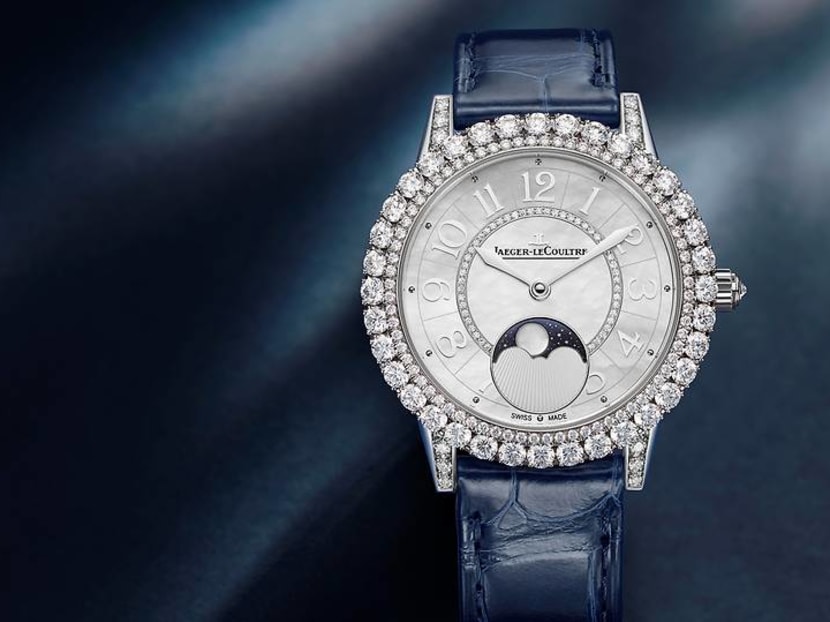
Watchmakers and jewellers rely on a variety of stone settings to bring out the brilliance of the gems. (Photos: Hublot, Jaeger-LeCoultre)
23 April 2022 06:30AM (Updated: 04 Jul 2022 04:37PM)
If Jaeger-LeCoultre's Rendez-Vous line is for the woman who likes elegantly designed circular watches just subdued enough to pair with a ability suit, and then the new Rendez-Vous from this year's SIHH are for the woman who doesn't want her elegantly designed round watches to shine nether fluorescent lighting just to dazzle under spotlights and chandeliers.
The Dazzling Rendez-Vous watches, comprising a 24-hour interval/nighttime model and a moon stage model, are aptly named thanks in large part to three.43 carats worth of diamonds adorning the white or pinkish gilded cases. Board meeting accessories these are not. Diamond-set bezels are par for the course in women'due south timepieces, just Jaeger-LeCoultre has turned to traditional jewellery for inspiration in this case past using the prong setting for its vivid-cutting stones.
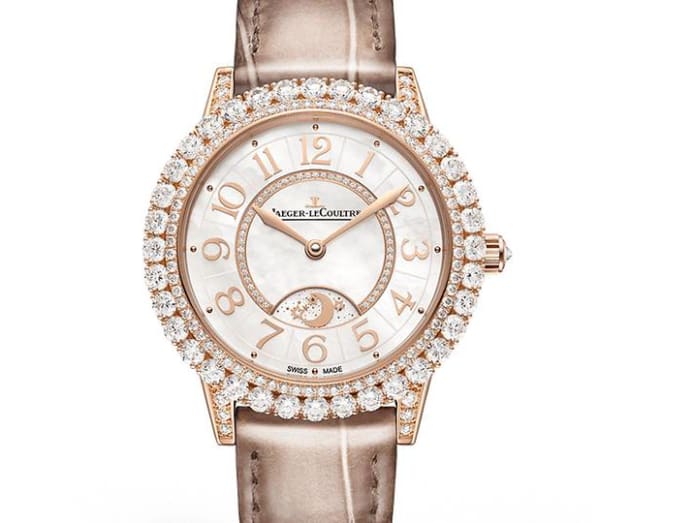
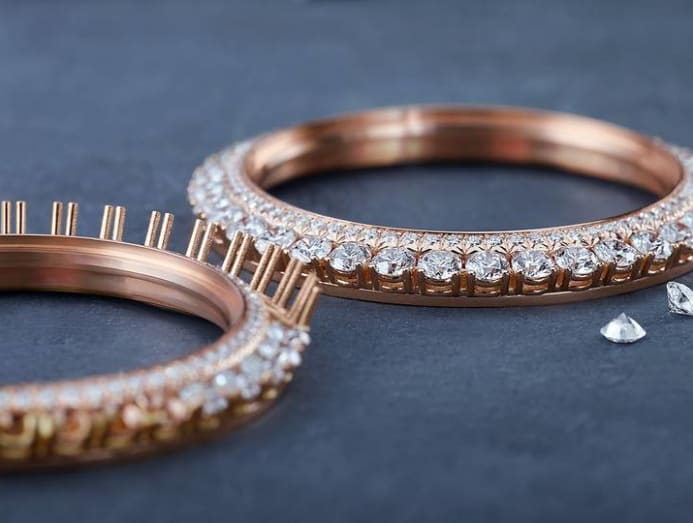
This type of setting, which typically uses three, iv or half-dozen individual prongs or claws to mount a gemstone, is particularly popular for engagement rings because it allows light to strike the solitaire from more angles. Only when gear up in a series, the Dazzling Rendez-Vous gains a subtle scalloped edge advent that sets it apart from its contemporaries.
The Dazzling Rendez-Vous Nighttime & Day is powered past the automatic Calibre 898B/1 and available in white or pinkish gilded, while the Dazzling Rendez-Vous Moon, which houses the automatic 925B/1, is merely available in white gilded. Both models are 36mm wide and feature mother-of-pearl dials.
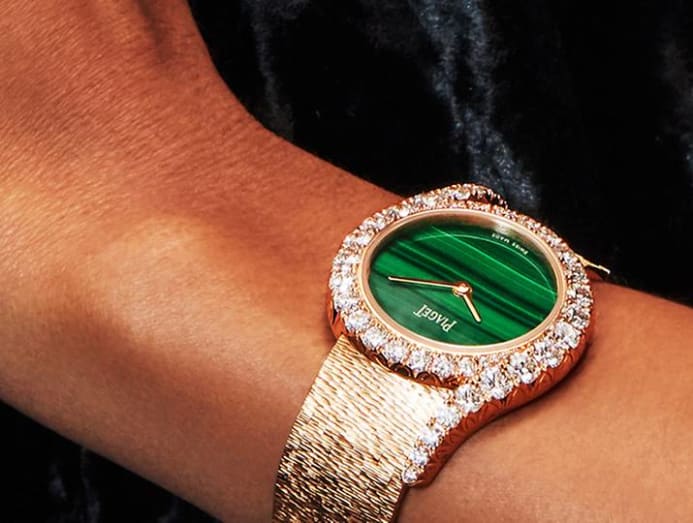
Jewellers and watchmakers make natural bedfellows so when a make specialises in both disciplines, the results are often ravishing. Piaget is one example where its gem-setting talents ofttimes cantankerous over to its watch collections. A malachite dial Limelight Gala watch from the 2022 collection uses a technique known equally serti descendu, or cut-downwardly setting, to concord its gems in identify. Golden is carved away to class claws and grooves that grip the stone, assuasive the diamonds to exist seen from the sides, as well.
Equally beautiful as mechanical movements are (at least when you're allowed to meet them) at that place are times when the blink of precious stones is more titillating. And while the stones themselves and the fashion they are cut have a lot to do with how much they sparkle, the setting is crucial in letting all that flash achieve our eyes. Here are 4 of the settings most favoured past horologers.
Dewdrop SETTING

Most of what you lot see in bejewelled watches volition fall nether this category. The stone – commonly circular – will be set in a low fabricated in the metallic and a scrap of that metal volition be pushed into and over the stone. A beading tool will circular information technology out and push it into the stone, creating a "bead" that keeps the rock in identify. Dewdrop setting variations are numerous: When many, closely set stones cover a surface, information technology's a pave; when multiple beads are raised for decorative purposes, information technology'southward a millegrain, so on.
Channel SETTING

The aqueduct setting is the preferred type when dealing with angular stones similar baguette or trapeze-cut gems. This allows the stones to fit snugly next on the bezel. The stones are set between two metallic strips – a channel – and considered one of the most secure ways to set jewels. When the channels cross the lines of the design, it is considered a bar setting but the mechanics are essentially the same.
INVISIBLE SETTING
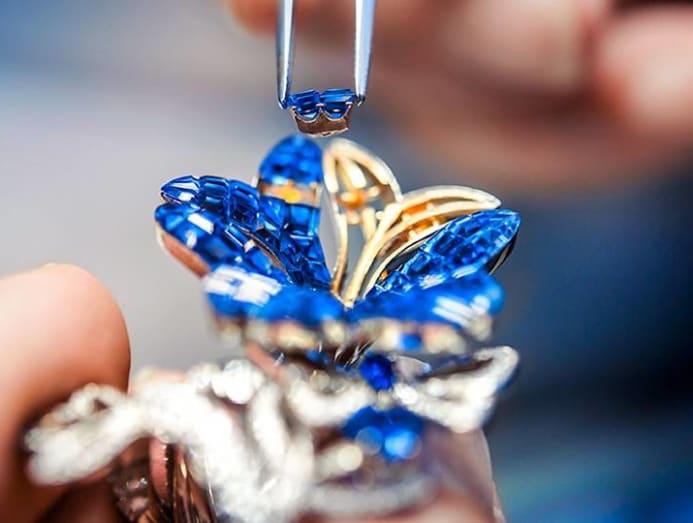
This setting ensures absolutely no metallic can exist seen so the gems appear to be free-standing. This illusion is achieved by cutting a groove into a rock and having it snapped into a metal rail. The stones are fix and so tightly confronting each other that the rails get hidden. The verbal origin of this setting is a piddling murky, though it'south widely believed that while Cartier filed a patent for this technique effectually the same fourth dimension as Van Cleef & Arpels did back in 1933, it was the latter who perfected information technology and patented the name "Mystery Setting". The company earned another patent five years afterwards for using the technique on curved surfaces.
Snowfall SETTING
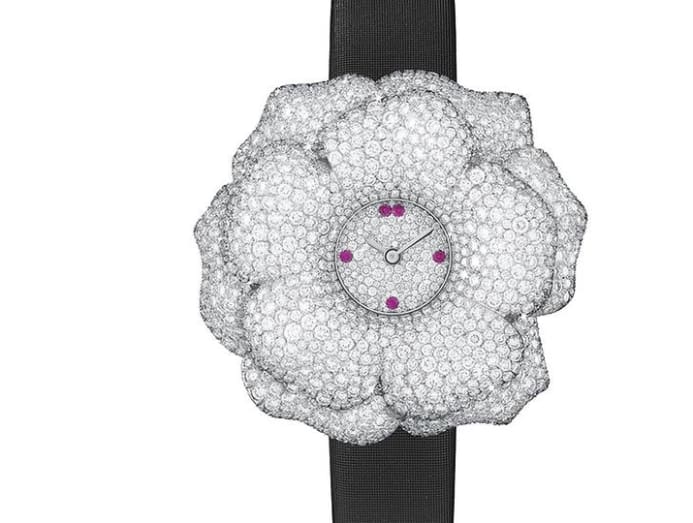
It speaks to Jaeger-LeCoultre'due south innovative spirit that it could beat bodily jewellers to inventing a whole new way of setting stones in this twenty-four hour period and age. Introduced in 2002, the snow-setting technique gets its name from the varying sizes of diamonds used to blanket a surface in a seemingly random fashion, glittering like fresh snow in the sun. Information technology's far more tedious than a standard pave since each stone, regardless of size, has to fit seamlessly confronting each other to leave as little metallic visible as possible.
READ> SIHH 2022 Trend Report: Flourish and femininity with women's watches
Source: https://cnalifestyle.channelnewsasia.com/obsessions/gemstone-settings-the-techniques-jewellers-favour-most-239506
0 Response to "Know your stone settings: The four techniques jewellers favour the most"
Postar um comentário